Showing posts with label red. Show all posts

Saturday, 7 December 2013

Corbieres Co-operative, Langudeoc

I recently visited a wine co-operative in Corbieres, down in the Langudeoc-Roussilon region of France. It was tucked away in the mountains, only accessible by winding mountain roads, weaving down in to valleys around vineyards - very beautiful! Co-operatives are very popular in France, they buy local grapes from various nearby vineyards and then make their own collection wines from it. At this particular co-op they buy the grapes by the vine rather than the quantity, this ensures that the quality is high and it is fair. 

We had a tour around the co-op and saw the vast fermenting tanks, oak ageing on a large scale and various other elements, such as the pressing of the grapes. 


As you can see the Co-op was situated in a beautiful location, up in the mountains but not far from the sea. 


Above, these are some of the fermentation tanks where the grapes are put in to. Below you can see the inside of an already emptied tank, whats left are the 'lees', a combination of the fermented skins and stalks. It is just like a very thick purple paint!


Below you can see the huge operation that this co-op carries out, even though it is a small co-op with only 64 Hectares of vines to harvest, it still produces a vast amount of wine.


Below you can see some of the stainless steel fermentation tanks, which are also very large!


When I saw this ahead of me I was very intrigued! I had never seen oak ageing like this before, as I usually see little caves with a few barrels in, but this was 10 times the scale! 


The oak barrels are stacked one on top of another. Some of the wines that the co-op produces are oak aged for a year in new oak, after a few years they replace the barrels to keep the oak scent strong in the wine. 


We then had a tasting in the co-ops own little bar. They had a fantastic type of 'wine vending machine', which was very fun! I wonder how long it will be before we start seeing them in our kitchens?! The open wines last for 15 days, and to access the wine you press a button and it comes out of a little spout - great! 


Below you can see how the machine works. The wines we tasted were really great, and inexpensive. We tasted a selection of red wines, the exact same wine, but half went in to oak barrels to be aged for a year, and the other half went straight in to bottle to age. The flavours were so different, the oak gave the wine smooth and spicy flavour, where as the bottled reds were less exciting.


A very interesting trip! 


xXx

Friday, 18 October 2013

Visit to Noilly Prat, Marseillan


I recently visited Noilly Prat in a small town by the sea called Marseillan down in the Languedoc region of the south of France. I confess that I had never tried or, knew much Vermouth before I had been there so it was interesting to see how it was made. Vermouth is a fortified white wine, which is aged in barrels and has certain spices and herbs added to it during this process which gives it it's unique flavour. Vermouth was invented by a man called Joseph Noilly in 1813, and in 1850 he started producing Noilly Prat, and their process has remained virtually unchanged since that time. 


This is my group on our visit!

We had a tour around their premises and got to see various parts of the processes that go in to making their Vermouth. Below you can see the old still that was used to make the Vermouth back in the day.


These are some of the very ancient barrels that were used to make the Vermouth. To clear out the sediments from the bottom a man used to crawl in through the small door and empty it- a little claustrophobic I would think! 


They age their wines outside in oak barrels, in the sun as this helps with enhancing their flavour as the temperatures get quite high inside. They have been using these particular American Oak barrels for hundreds of years, and to keep them from splitting they spray them with water once a day to protect the Oak.


Once the wine is ready in the barrel, they empty the barrels by letting them 'free flow', which means the wine runs freely from the barrel in to the large tanks below.


The Vermouth is then aged again in these large barrels below, and this is when they have their unique spices added and they are left to ferment for longer here. They have different flavoured Vermouths, so they add certain herbs and spices to each one. 


They make 3 flavours of their famous Vermouth, the first is their original Dry Vermouth, then their Rouge and finally their Amber Vermouth.


The original Dry Vermouth has a very savoury, herbal taste to it. I didn't find it particularly pleasant to drink on its own, but it would work well for cooking.

The Rouge Vermouth was a little more to my liking but still with a savoury twang. This had a more spicy flavour that would work well with a twist of orange with it.

My favourite was the Amber Vermouth. This had a sweet, Christmassy flavour to it, with hints of cinnamon, orange and vanilla. This one is also particularly special as one can only buy it at their premises in Marseillan. I think it would work really well with a fruit cake or a mince pie, so I am saving my bottle until December! 


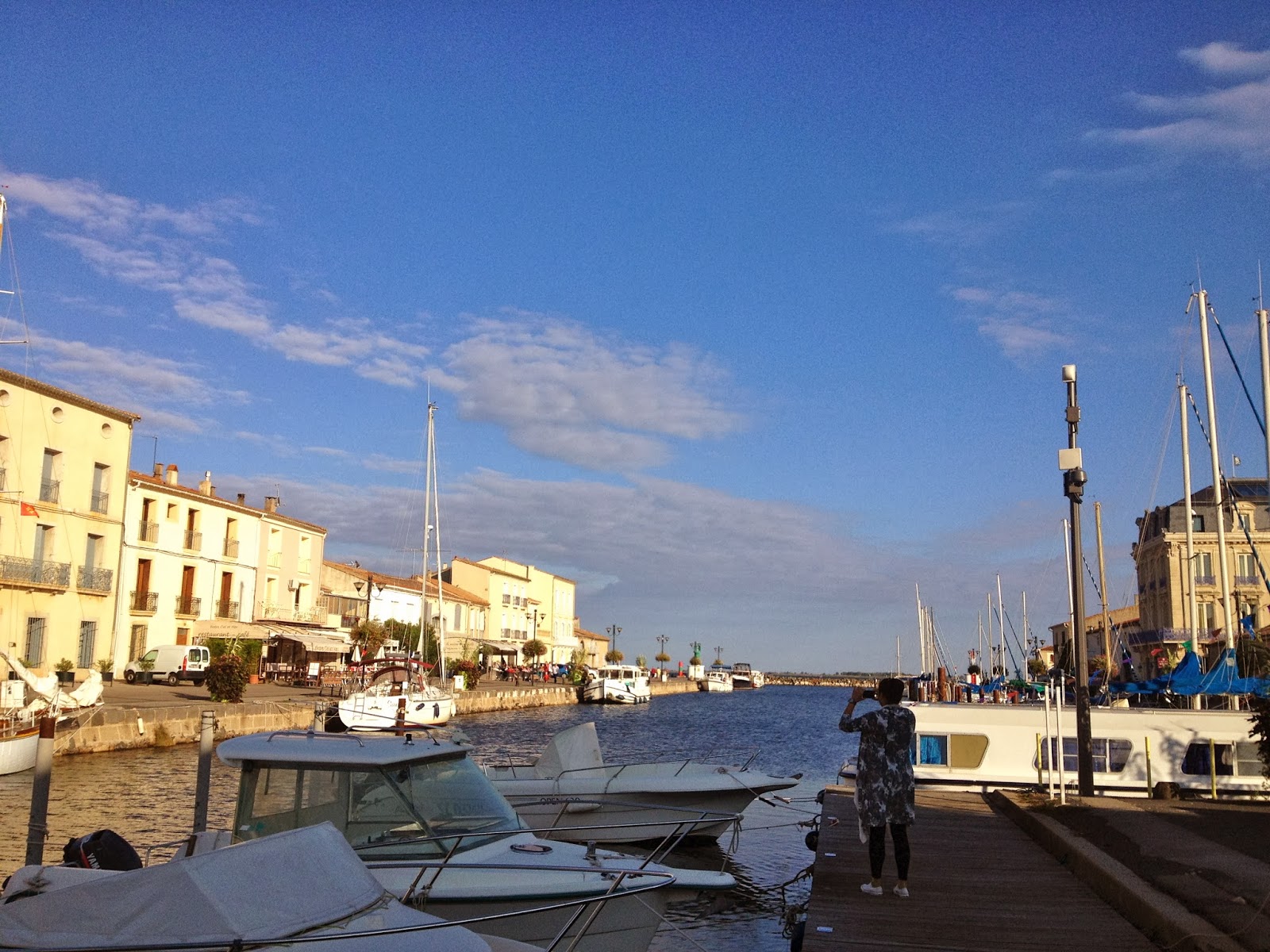
This is the beautiful seaside town of Marseillan. It is very small, but very beautiful with boats along the water and inciting looking restaurants. If you are ever in the area, I highly recommend a visit! 

xXx

Sunday, 6 October 2013

Pip's Tips: How to taste a wine


These are a few tips from me as how to taste a wine. They start with the appearance of the wine and then on to the nose and palate. If you try and taste some wines whilst looking at this list then it will allow you to appreciate the wines and help you understand them as they tend to be pretty complex things. So give it a go! 


Appearance
It is important to look at the wine before you smell it as it can tell you a lot about the wine before you even start!

1. Colour
-This can give an indication of how old the wine is.
- For White wines, a lemon/ light green colour means that it is a young wine, an older wine will be a darker yellow colour, verging on brown in some instances. This darker colour comes from the barrels that it is fermented in.
- The colour in Red wines can show the body of the wine. A light red colour will mean it is lighter and a dark red colour will have more depth and body. To see the colour of the red, look at the edges of the glass.

2. Tears/ Legs
When you swill the wine around the glass and let it settle you can see the wine marks on the side of the glass – these are called the tears or legs. They come from the amount of glycerol in the wine, so if there are more legs then the wine has more body and a higher sugar content. They are generally more apparent in Red wines. It shows how ‘heavy’ the wine is.


Nose
You can gather a lot about the wine just by smelling it. It helps to give the wine a swill around the glass first and also to have a sip of it as this allows the flavours to develop and change in your airways.

1. Smell
- Check that the smell is clean first and that it does not have cork taint or smell ‘off’.
- It is easy to pick up 2 aromas to begin with. These tend to be either fruity or floral scents. After your first sip of the wine, smell again and the flavours will change and become more apparent- you will be able to pick up other scents like vegetal/ spicy/ earthy etc.
- When you swill the wine you bring oxygen in to the wine which releases flavour but also the alcoholic scent.
- You can smell the age. If it is a younger wine it will smell fruity/ floral. For a white wine there will be green fruit notes like apple and citrus.


Palate
This is the enjoyable part! Really let the wine sit in your mouth for a little while rather than swallowing straight away. And try to take some breaths through your nose as this allows the oxygen to meet with the wine and intensify the flavour.

1. Acidity
The younger a wine is the more acidity it will have.

2. Dryness/ sweetness
If a wine has some acidity then it will usually be a dry wine with little or no sweetness. And the sweeter a wine is then the less acidity there will be.

3. Tannins
Tannins are mostly found in Red wines. These can either be light or heavy and they coat the mouth.

4. Alcohol
The presence of the alcohol is easy to detect, sometimes it can be a little too over powering. But it can be important in giving balance to a wine.

5. Finish
The length of the wine is a combination of the sweetness/ alcohol and acidity. It can either have a short or long finish. Usually light wines have a short finish, where as more bodied wines have a long taste that lingers on the palate.


xXx

Visit to my Wine Teacher's Vineyard and Winery

Every week on my wine course down here in the South of France, we have a visit to a vineyard to learn a little more about how things work and to get involved ourselves. This week we visited my wine teacher, Aymeric's, vineyard and winery in his home village of Montblanc, which is in the 
Languedoc-Roussillon region of France, close to my school. 


We spent the first part of the day picking Cabernet Franc grapes, which are a red variety with a white centre and they tend to make light red wines. We worked in pairs and then worked our way down the vines collecting grapes in crates ready to pack in to the back of their pick-up truck and take straight to their winery. Quite a few of the grapes were overripe and had noble rot (a little of which can be good as it gives a different taste to the wine, but too much is bad), so we had to select the bunches carefully. 


Here we are being taught about how to select the bunches of grapes and to see which types of rot are good and bad.


The grapes ready to go in to the back of the pick-up truck and then on to the winery.


Below is the wine picking team!


Once we had picked our rows we then went back to their winery which is in the centre of their little village of Montblanc. Their winery is in their old garage which they converted 3 years ago, and is underneath their house. Aymeric told us that his family has lived in Montblanc since the 15th Century, and 3 generations of his family currently all live in the house above the winery - amazing! 


Aymeric's house and winery, inside and out! 


Aymeric showed us how the grape press worked and his brother jumped in to start squashing down the grapes to allow for them all to fit in. The press is then turned on and the ends of the press come in to the centre whilst it is rotating. This then leaves all of the skins, pips and stalks in the middle. The process then starts again and the remaining grape pulp is then pressed for a second time, but the juice is much stronger and contains more tannins, as it is in the skin, pips and stalk that they lie, so it is not pressed for as long as the first press.
During this time the wine is being pumped from the press in to a tank where it will begin fermenting. 


Aymeric and his brother above are putting the grapes in to the press, and below are some of us who helped! 


We then saw the de-stemmer in action, which is a machine that removes the major part of the stem from the bunch. The de-stemmer is used when the grapes have been harvested by machine and therefore more stalk is removed as it is less accurate than harvesting by hand as you can be more selective. 
The de-stemmer works by 2 pieces of metal rotating around each other which pull off the stalks and releases the grapes underneath.


After the hard work we then went on to do some tasting! We tasted some 4 of their fermenting wines at different stages. We tried a white, rose and red wine about 3 weeks in to fermentation and then a merlot which was further along. 


Above Aymeric is giving me some of the fermenting white wine to try. 
Below is a close up of the fermenting white. It had a strong yeast flavour as it was early in the fermenting process, this also meant that it was quite sweet. As you can see it is very cloudy and the clarity will come as it ages.


Below is a rose wine, also about 3 weeks in to fermentation. As you can see the typical rose colour is there, but has a strong orange tinge. This was also quite sweet and yeasty.


Below is a fermenting red wine, also 3 weeks in to fermentation. The colour was almost luminous when held up to the light, with another strong sweetness to it. 


Below was a merlot that we tasted which was much further along in the fermentation process. As you can see, it has a much deeper red colour to it and you could really taste the flavours starting to develop. There was less sweetness and more acidity and tannins.


We then had a chance to try their finished product, which we enjoyed with some Comte cheese and some fresh baguette. Below you can see their label of wine, which is of Aymeric and his brother- a very fun idea! It was the perfect end to a very interesting day! 


xXx

Sunday, 29 September 2013

Chateau L'Hospitalet, Gerard Bertrand

I am currently living down in the Languedoc-Roussillon region of the south of France learning about wine. Possibly the biggest winemaker in the region is Gerard Bertrand. He buys grapes from various private vineyards around the region and then makes several wines from all of the grapes. He also has his own grapes. We went to his private estate called Chateau L'Hospitalet, where there is also a hotel and restaurant.

We visited his tasting rooms and tried several Roses and Reds. It was interesting to try a range of wines that also ranged in price quite heavily, and I enjoyed tasting a Rose at a higher price as it is good to see the quality of a more expensive Rose. They had very smart tasting rooms, and we also saw some of the winery and the grapes that had just been pressed. These were going to be sent away to be distilled to make Brandy and other spirits. 


Below is the hotel part of the estate, which has a rustic French feel to it. I love the pistachio green of the shutters, such a popular colour in the south of France.


These are the pressed grapes that were being sent off to be distilled. It was interesting to see what they looked like once they had been pressed- a little like raisins! 


Below you can see part of the winery and the vats where the wine was fermenting.


This is the main tasting room and where they had all of their different wines on sale. It was interesting to the see the vast array of wines that Bertrand produces. The prices ranged from about €7 to well over €100.


Wines we tasted:

Chateau La Sauvageonne 2012: €16
This is the first Rose that I tried, and it was an unusual Rose as it had been oaked. It has more body than usual Roses, due to there being a few tannins present as well. It would be a good wine to go with cured meats and salads, nothing too overpowering.


Gris Blanc, 2012: €7
This is a very pale Rose, with a similar taste to a White wine. It is a little thin on the palate though. It is one of the most popular Roses on sale in France now, due to its price and easy availability. I think it would be good as an aperitif with a few canapes, as it is more of a palate cleanser before drinking a stronger wine with a meal. 


Cigalus, 2011: €28
This Rose is an IGP wine (Indication Geographique Protegee), which means that the grapes used to make the wine have to come from one particular geographic region, and the producers have to submit their wine for analysis and tasting before selling it. It has a complex taste on the palate, it was oaked and more similar to a white wine than a Rose. It has a mineral taste with a slight saltiness, but a long and crisp finish. The more expensive taste comes from a low yield of grapes used to make the wine.


Domaine de L'Aigle, Pinot Noir, 2011
This is a fresh tasting red wine, quite light on the palate with not much body. It would be a good wine as an aperitif with some canapes before having a fuller bodied wine with a meal.


Chateau Laville Bertrou, 2010: €11
This is a wonderful dark red wine with a jammy flavour of dark fruits and a heavy oak. It is a full bodied and tannic wine. As it is a powerful wine it really needs to be paired with a red meat and sauce so that the flavours match. I was really impressed with this wine and I therefore bought a bottle!


Domaine de Villemajou, 2011: €11.50
This is another fantastic red wine at a reasonable price. This wine is from Gerard Bertrand's Fathers vineyard, which he took over, so it has a family connection. It has an earthy, almost dusty taste to it, with the smell and taste on the palate of a forest floor. It is spicy with a hint of earthy mushroom. It is a medium bodied Red wine, that would pair very well with an earthy dish. Such as something with mushrooms, Game and a creamy sauce. 


Chateau La Sauvageonne, 2011: €25
This is a fruity wine with slight vegetal hints, it has a strong blackcurrant and dark fruit flavour with some sweet notes. It is a fresh Red wine that would be good as an aperitif or alongside a dish like risotto or something creamy as it would act as a contrast to cut through the creamy consistency. 


Gerard Bertrand, Aigle Royal, 2011: €43
This is a more special wine as the grapes are grown at 500m above sea level. It is a very ripe tasting wine and therefore has a sweeter note. It has a spicy and fruity taste, along with notes of leather and black pepper. This would be a good wine alongside an earthy flavoured meat dish.


Gerard Bertrand, L'Hospitalitas, 2011: €43
This is a spicy wine with a definite heat to it. It has earthy notes and I think that it would go well with something like risotto, polenta or a creamy pasta dish as it would give a good contrast in flavour and consistency. 


Cigalus Rouge, 2011: around €30
This is a complex tasting wine with lots of different flavour hints, this is because it is made from several different grape varieties. It is a very dark wine with a subtle smell of liquorice, and on the palate there is a vegetal, almost mouldy hint. It would go well with a sweet savoury dish, something like Pork with prunes or dates.


Here I am tasting some of the wine!
And below you can see some of the wine caves, where you can see the barrels. 


It is certainly an impressive estate that has made the most of its grounds with a hotel, restaurant and various art displays around the estate. It is definitely worth a visit if you happen to be down in the Languedoc-Roussillon region of France! 


xXx